leski-bieszczadzki
POlandABOUT PILOT AREA
The pilot area is located in the Podkarpackie Voivodeship in a mountainous area covering two districts: Leski and Bieszczadzki. The area is large in size, but at the same time one of the least populated areas in Poland. It is located on the border with Ukraine and Slovakia, covering the Bieszczady and Sanocko-Turczańskie Mountains. The inhabitants of this region face exclusion on many levels, including access to services, job opportunities, and educational opportunities. For some children, secondary schools are located about 50-60 km from their place of residence, there is a lack of nurseries and kindergartens. Many people work in the tourism industry, which is characterized by seasonality and the presence of tourists.
The pilot area has one of the highest unemployment rates in Poland, young people are flying away, but on the other hand, it has social potential. Research reveals that it has the highest saturation of nonprofit organizations per 10,000 inhabitants, which shows that where many things are lacking, residents take matters into their own hands and start grassroots activities.
ABOUT VULNERABLE GROUPS OF THE PILOT AREA
Several vulnerable groups have been identified in Leski-Bieszczadzki area:
1. Women – living in remote mountainous rural areas, far from many educational and employment opportunities, lack of support in caring for children and the elderly, and household responsibilities resting on their shoulders are factors that cause the exclusion of women in particular from the labor market and financial security.
2. Elderly people – excluded largely in terms of transport, but also economically. There is lack of access to services, including health and care services, and lower digital skills contribute to seniors being a group in need of support.
3. Young people – living in peripheral areas means a limited educational and first job opportunities, a lack of entertainment, no opportunities for development. Some youths leave their family homes after completing primary school at the age of 14-15 and begin living in boarding schools, then move to other places, and some of them never return.
4. Persons with disabilities – Disability is still a taboo subject, it is almost invisible in the public space. Exclusion consists of a lack of appropriate day care places, but also 24-hour care, a lack of appropriate activities, a lack of infrastructure and a systemic lack of support. The biggest problem is with people who are entering adulthood – there are no prospects for them, no job opportunities, no inclusion in various activities, no Professional Activity Facility.
NEWS/OUTCOMES
ESIRA MAP Meeting: Advancing Social Innovation in the Druskininkai Region
On 9 September 2026, the Institute of Economics and Rural Development at the Lithuanian Centre for Social Sciences, together with the Druskininkai Local Action Group, organised an ESIRA project (Enhancing Social Innovation in Rural Areas) MAP (Multi-Actor Platform)...
ESIRA presented at the Community-based Cooperatives Festival in Abruzzo
From 4 to 6 September 2026, Borghi IN Rete organised the Community-based Cooperatives Festival in Abruzzo, Italy, bringing together community cooperatives, local communities, institutions, organisations and researchers working to strengthen the social and economic...
ESIRA stand attracts strong interest at Grensedagarna BRIDGE
This week, the Norwegian ESIRA-team participated in the Norwegian-Swedish cross-border event Grensedagarna BRIDGE at Morokulien. Together with Innlandsstatistikk and Innlandet County Council, the project presented ongoing activities in the Kongsvinger...
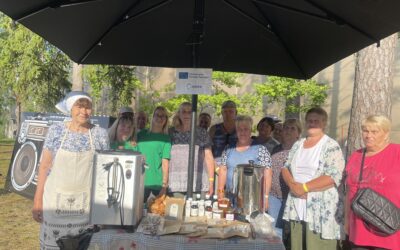
ESIRA Regional Dissemination Workshop in Druskininkai Showcases Community-Led Social Innovation
On 26 June 2026, the ESIRA Regional Dissemination Workshop “Social Innovation in Rural Areas: Results of Implemented Social Initiatives and Future Opportunities” took place in Druskininkai Municipality, Lithuania. The event brought together more than 100 participants,...
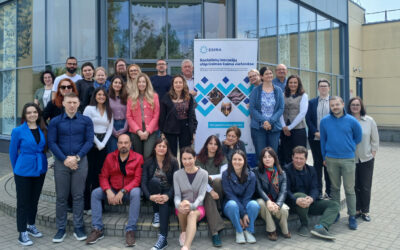
The Fifth General Assembly was held in Lithuania
The Fifth General Assembly of the ESIRA project was held from May 19 to 22, 2026, in Druskininkai, Lithuania. The meeting was organized by the Lithuanian Centre for Social Sciences and Druskininkai Local Action Group. Over three days, partners reviewed ESIRA progress,...
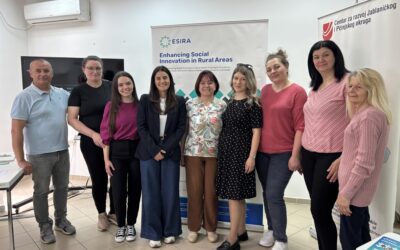
ESIRA Regional Dissemination Workshop in Leskovac Highlights Support for Rural Women Entrepreneurs
A regional dissemination workshop was held on 11 May 2026 in Leskovac, Serbia, bringing together women entrepreneurs from rural areas, representatives of local development institutions, entrepreneurship experts, and specialists in marketing, branding, and business...
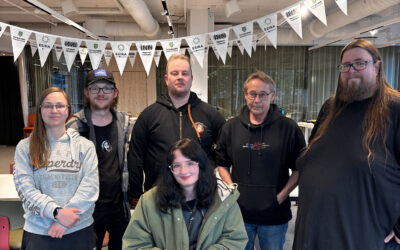
ARENA_Gaming Kongsvinger officially established
ARENA_Gaming Kongsvinger, a pilot from the Norwegian partner in ESIRA, was formally established as a non-profit association on 4 May. As a community-driven and non-commercial initiative, ARENA_Gaming represents a clear social economy initiative, aiming to create an...
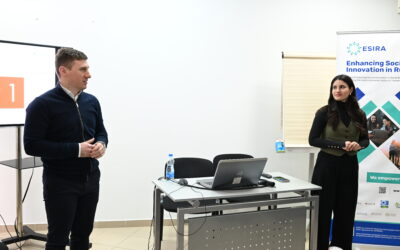
INITIATIVE TO SUPPORT WOMEN-LED RURAL BUSINESSES LAUNCHED IN LESKOVAC
An initiative aimed at strengthening small women-led businesses from rural areas was launched on 18 February 2026 in Leskovac. The event was organized by the Institute for Development and Innovation (IRI), together with the Center for Development of Jablanica and...

STRENGTHENING THE SOCIAL ECONOMY IN REGIONS: DRUSKININKAI RURAL AREA
On December 8–9, 2025, the Institute of Economics and Rural Development of the Lithuanian Center for Social Sciences, together with the Druskininkai Local Action Group, organized a two-day ESIRA project working meeting. The event brought together representatives of...

ESIRA project held scientific dissemination workshop and Community of Practice session on rural innovation
The ESIRA project successfully organized its final Scientific Dissemination Workshop for this year, titled “From Collaboration to Action: How Multi-Actor Platforms Shape Rural Innovation”, followed by a Community of Practice (CoP) session entitled “Lessons Learned and...