
BURGOS
SPAINABOUT PILOT AREA
The wood-related industry is of paramount importance in the region, as municipalities own 80% of the total area (communal forest property), with timber harvesting being a traditional activity. R&D activities explore forestry-related potentials, and public support mechanisms, such as Forest Management Plans, are in place. Cultural and natural tourism activities significantly boost the local economy. Priorities include cultural initiatives, digital literacy, new transport models, labor inclusion, natural resources preservation, and housing access. The Pinares area benefits greatly from the vast opportunities provided by its long-standing wood industry tradition. Several research and development initiatives are exploring the potential of forestry-related activities — such as LIFE Soria ForestAdapt, ZeroFires, and the International Model Forest Network — and there are already public support mechanisms in place, including Forest Management Plans and reductions in Social Security contributions in the province of Soria. Cultural and nature-based tourism also make a significant contribution to the local economy. UBU, FO2, and SODEBUR aim to support existing initiatives in these areas — such as House of the Wood, Cabaña Real de Carreteros, Que la Sierra Baile, the TurismoUrbion Association, and SMART VILLAGES — while continuing to develop new social economy projects around them. The following areas have been identified as priorities: cultural initiatives, digital literacy and services, new transportation models, labor inclusion, preservation and management of natural resources, and access to housing for migrants and neo-rurals.
ABOUT VULNERABLE GROUPS OF THE PILOT AREA
The main aim is to improve the living conditions of people in vulnerable situations, particularly the elderly, young people, and women, who face a significant lack of opportunities in the area. In this context, the ESIRA pilot in the Pinares area seeks to strengthen the local community, promote social cohesion and mutual support, enhance social services, and facilitate the creation of opportunities for entrepreneurship within social economy initiatives. The main needs identified through engagement with the local community include the lack of clear funding pathways, the complexity and rigidity of administrative procedures with public authorities, and difficulties in incorporating social, environmental, and community-strengthening dimensions into local initiatives.
NEWS/OUTCOMES
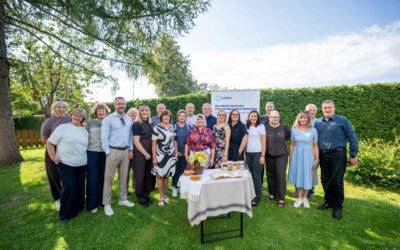
ESIRA MAP Meeting: Advancing Social Innovation in the Druskininkai Region
On 9 September 2026, the Institute of Economics and Rural Development at the Lithuanian Centre for Social Sciences, together with the Druskininkai Local Action Group, organised an ESIRA project (Enhancing Social Innovation in Rural Areas) MAP (Multi-Actor Platform)...
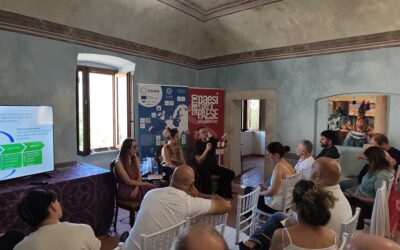
ESIRA presented at the Community-based Cooperatives Festival in Abruzzo
From 4 to 6 September 2026, Borghi IN Rete organised the Community-based Cooperatives Festival in Abruzzo, Italy, bringing together community cooperatives, local communities, institutions, organisations and researchers working to strengthen the social and economic...
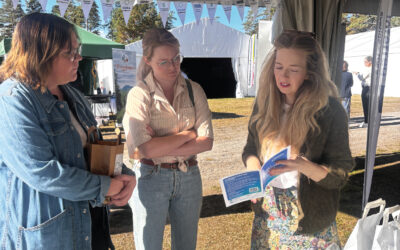
ESIRA stand attracts strong interest at Grensedagarna BRIDGE
This week, the Norwegian ESIRA-team participated in the Norwegian-Swedish cross-border event Grensedagarna BRIDGE at Morokulien. Together with Innlandsstatistikk and Innlandet County Council, the project presented ongoing activities in the Kongsvinger...
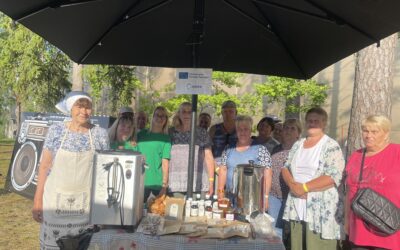
ESIRA Regional Dissemination Workshop in Druskininkai Showcases Community-Led Social Innovation
On 26 June 2026, the ESIRA Regional Dissemination Workshop “Social Innovation in Rural Areas: Results of Implemented Social Initiatives and Future Opportunities” took place in Druskininkai Municipality, Lithuania. The event brought together more than 100 participants,...
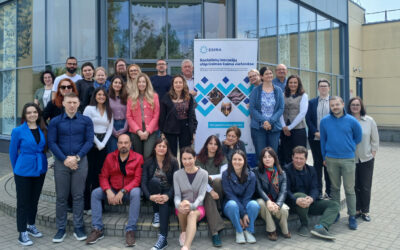
The Fifth General Assembly was held in Lithuania
The Fifth General Assembly of the ESIRA project was held from May 19 to 22, 2026, in Druskininkai, Lithuania. The meeting was organized by the Lithuanian Centre for Social Sciences and Druskininkai Local Action Group. Over three days, partners reviewed ESIRA progress,...
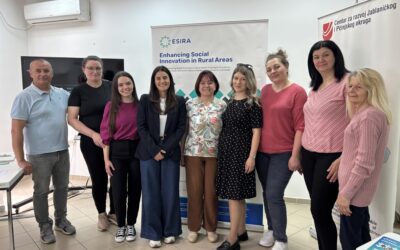
ESIRA Regional Dissemination Workshop in Leskovac Highlights Support for Rural Women Entrepreneurs
A regional dissemination workshop was held on 11 May 2026 in Leskovac, Serbia, bringing together women entrepreneurs from rural areas, representatives of local development institutions, entrepreneurship experts, and specialists in marketing, branding, and business...
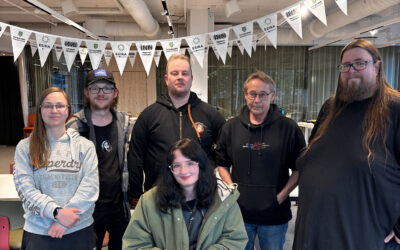
ARENA_Gaming Kongsvinger officially established
ARENA_Gaming Kongsvinger, a pilot from the Norwegian partner in ESIRA, was formally established as a non-profit association on 4 May. As a community-driven and non-commercial initiative, ARENA_Gaming represents a clear social economy initiative, aiming to create an...
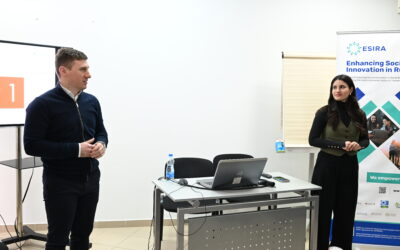
INITIATIVE TO SUPPORT WOMEN-LED RURAL BUSINESSES LAUNCHED IN LESKOVAC
An initiative aimed at strengthening small women-led businesses from rural areas was launched on 18 February 2026 in Leskovac. The event was organized by the Institute for Development and Innovation (IRI), together with the Center for Development of Jablanica and...

STRENGTHENING THE SOCIAL ECONOMY IN REGIONS: DRUSKININKAI RURAL AREA
On December 8–9, 2025, the Institute of Economics and Rural Development of the Lithuanian Center for Social Sciences, together with the Druskininkai Local Action Group, organized a two-day ESIRA project working meeting. The event brought together representatives of...

ESIRA project held scientific dissemination workshop and Community of Practice session on rural innovation
The ESIRA project successfully organized its final Scientific Dissemination Workshop for this year, titled “From Collaboration to Action: How Multi-Actor Platforms Shape Rural Innovation”, followed by a Community of Practice (CoP) session entitled “Lessons Learned and...