
Trentino
ITALYABOUT PILOT AREA
Trentino is located in the Autonomous Province of Trento, is a predominantly mountainous territory characterised by Alpine geography, extensive forests, rich biodiversity, and cold, snowy winters with warm valley summers . Home to approximately 543,000 inhabitants, the region shows a modest population growth driven by positive in-migration, yet it faces structural demographic challenges such as ageing and the depopulation of rural and high-altitude areas. Trentino hosts a dynamic and diversified economy with strong sectors in agriculture – especially apples and viticulture – tourism, manufacturing and services, reflected in a GDP per capita well above the national average.
Despite high living standards, rural communities experience significant challenges, including limited access to essential services, mobility constraints shaped by the mountainous morphology, gaps in digital connectivity, and fewer employment opportunities, particularly for young people. These factors contribute to social vulnerability and highlight the need for targeted policies to sustain local development, promote inclusion, and ensure the long-term vitality of Trentino’s rural areas.
Trento boasts a significant cooperative movement, aligning social policies with labor policies and involving various stakeholders. Laws promote solidarity economy and corporate social responsibility. Initiatives like the COPE project focus on social and labor inclusion for young NEETs. Service cooperatives enhance inclusivity in the tourism sector, while platforms like InCooperazione support vulnerable groups’ social and labor inclusion. Priorities include enhancing social and labor inclusion, fostering cooperative models, and supporting innovative digital tools for social welfare.
ABOUT VULNERABLE GROUPS OF THE PILOT AREA
Rural and mountain areas of Trentino face demographic decline, ageing, isolation and service shortages, making both individuals and entire communities vulnerable. NEETs struggle with limited opportunities for training, socialisation and employment, with the pandemic worsening disengagement among young people. Women experience lower employment and higher inactivity despite strong educational levels, and may require targeted support due to care burdens or exposure to violence. People with disabilities face accessibility barriers, few specialised services and difficult school-to-work transitions, particularly in remote municipalities. Immigrants risk social isolation in small villages and are more exposed to precarious work conditions in rural sectors. Elderly people encounter limited mobility, reduced access to healthcare and a high risk of loneliness in sparsely populated areas.
NEWS/OUTCOMES
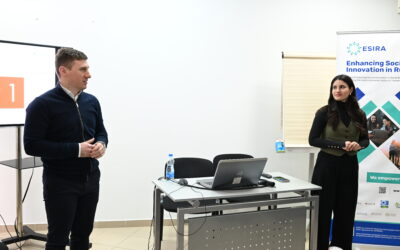
INITIATIVE TO SUPPORT WOMEN-LED RURAL BUSINESSES LAUNCHED IN LESKOVAC
An initiative aimed at strengthening small women-led businesses from rural areas was launched on 18 February 2026 in Leskovac. The event was organized by the Institute for Development and Innovation (IRI), together with the Center for Development of Jablanica and...

STRENGTHENING THE SOCIAL ECONOMY IN REGIONS: DRUSKININKAI RURAL AREA
On December 8–9, 2025, the Institute of Economics and Rural Development of the Lithuanian Center for Social Sciences, together with the Druskininkai Local Action Group, organized a two-day ESIRA project working meeting. The event brought together representatives of...

ESIRA PROJECT HELD SCIENTIFIC DISSEMINATION WORKSHOP AND COMMUNITY OF PRACTICE SESSION ON RURAL INNOVATION
The ESIRA project successfully organized its final Scientific Dissemination Workshop for this year, titled “From Collaboration to Action: How Multi-Actor Platforms Shape Rural Innovation”, followed by a Community of Practice (CoP) session entitled “Lessons Learned and...

ESIRA AND SERIGO CALL FOR A MORE HOLISTIC VISION TO RURAL POLICY PLANNING
20 November 2025. ESIRA and SERIGO projects organised a joint policy workshop held on 20 November 2025 in Brussels, to explore how community-led social innovation can enhance the social inclusion of vulnerable groups in rural areas. Co-organised by the European...

SAVE THE DATE AND CALL FOR PARTICIPATION: ESIRA Scientific Dissemination Workshop and CoP Session
The ESIRA project is pleased to announce the upcoming Scientific Dissemination Workshop & Community of Practice (CoP) Session, taking place on 17 December 2025 at 10:00 CET, online on MS Teams. Under the title “From Collaboration to Action: How Multi-Actor...

RURAL INNOVATION TAKES CENTRE STAGE AT 10TH EMES CONFERENCE WITH A PANEL ON RURAL SOCIAL ECONOMY
A team of researchers from the ESIRA and SERIGO Horizon Europe projects presented their findings at the 10th EMES conference. Coordinated by Luca Koltai (HÉTFA Research Institute), the panel featured contributions from scholars at the University of Burgos, Euricse,...

THE FOURTH GENERAL ASSEMBLY WAS HELAD IN POLAND
The fourth General Assembly of the ESIRA project (Enhancing Social Inclusion and Rural Areas) took place from October 15 to 17, 2025, in Orelec, in the Bieszczady Mountains, Poland. The event was hosted by the local partner, the European Rural Development Network...

ACCESSIBLE CINEMA EVENT IN CILLERUELO DE ABAJO PROMOTES SOCIAL INCLUSION IN RURAL AREAS
Last weekend, the village of Cilleruelo de Abajo, in the province of Burgos, held a very special event dedicated to accessible cinema. The initiative was organized by the Collalba Cultural Association, in collaboration with ARANSBUR (Association of Families of Deaf...

EL HUECO AND EL COLLETERO SHOWCASES FOR RURAL SOCIAL INNOVATION UNDER ESIRA PROJECT
As part of the training activities carried out by the European ESIRA Project, focused on promoting social innovation in rural areas, on Friday, September 12, nearly 50 rural development practitioners took part in an intensive workday aimed at identifying and learning...

COMMUNITY ENGAGEMENT AND CO-DESIGN FOR SOLIDARITY ECONOMY IN TRENTINO
As part of the ESIRA project, two key activities took place in May and June 2025 in the Autonomous Province of Trento, focusing on understanding local needs and fostering sustainable, community-based development. Exploratory meetings in Valli del Leno and Folgaria On...