
zachodniopomorskie
POlandABOUT PILOT AREA
The Gryfice District is located in the northwestern part of the West Pomeranian Voivodeship and covers an area of 1,021 km². It is a typically agricultural region, dominated by large farms, supplemented by small and medium-sized farms. The area is attractive area in terms of its geographical location, natural landscape, and cultural values, but its potential remains untapped.
The region comprises six municipalities. The area is characterized by low population density and negative demographic trends, including negative natural growth and net migration. These trends lead to the progressive depopulation of rural areas and an aging population. In economic terms, the Gryfice District is one of the least favorable areas in the province. It is classified as a deficit area and is characterized by an accumulation of unfavorable socioeconomic and spatial phenomena. These phenomena result largely from the specific layout of the settlement network and the historically large share of socialized agriculture. A clear problem in the region is the high unemployment rate and predominance of low-paid jobs. This situation is further exacerbated by limited autonomous development potential at the municipal level, which prevents the creation of effective new jobs. The lack of development opportunities is closely linked to limited access to infrastructure and public services, which is exacerbated by transport exclusion. These barriers significantly impact residents’ daily lives, deepening social exclusion and hindering effective professional activation.
ABOUT VULNERABLE GROUPS OF THE PILOT AREA
Vulnerable groups of Zachodniopomorskie are:
1. The long-term unemployed, including women in rural areas. This group represents a key and strongly identified structural problem in the county, resulting from the legacy of state-owned farms. Long-term unemployment leads to permanent passivity, social helplessness, and alienation, creating “enclaves of poverty” in these areas. Intervention in this group is necessary to break the cycle of exclusion.
2. Young people, whom we identify as a strategic group for the future and development potential of the district. Addressing the problem of young people is a priority because their emigration (negative migration balance) leads to an aging population and a permanent decline in population, thus undermining any long-term development potential of the region. Early support for young people in entering the labor market or creating their own social economy entities is crucial to break the cycle of poverty and helplessness passed down from generation to generation (especially in areas formerly occupied by state-owned farms) and prevent them from becoming long-term unemployed. Furthermore, investing in youth development is an investment in the future workforce of social enterprises and local leaders, which is the only way to reverse negative demographic and economic trends in the long term.
NEWS/OUTCOMES
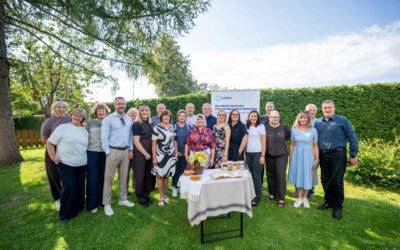
ESIRA MAP Meeting: Advancing Social Innovation in the Druskininkai Region
On 9 September 2026, the Institute of Economics and Rural Development at the Lithuanian Centre for Social Sciences, together with the Druskininkai Local Action Group, organised an ESIRA project (Enhancing Social Innovation in Rural Areas) MAP (Multi-Actor Platform)...
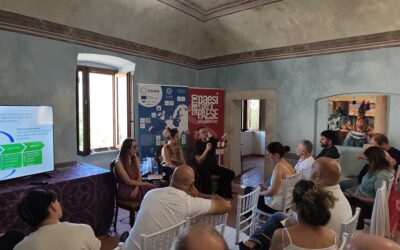
ESIRA presented at the Community-based Cooperatives Festival in Abruzzo
From 4 to 6 September 2026, Borghi IN Rete organised the Community-based Cooperatives Festival in Abruzzo, Italy, bringing together community cooperatives, local communities, institutions, organisations and researchers working to strengthen the social and economic...
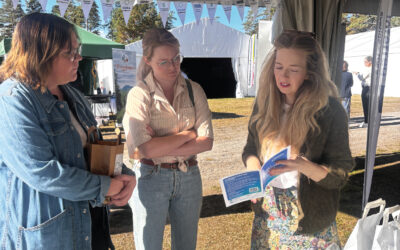
ESIRA stand attracts strong interest at Grensedagarna BRIDGE
This week, the Norwegian ESIRA-team participated in the Norwegian-Swedish cross-border event Grensedagarna BRIDGE at Morokulien. Together with Innlandsstatistikk and Innlandet County Council, the project presented ongoing activities in the Kongsvinger...
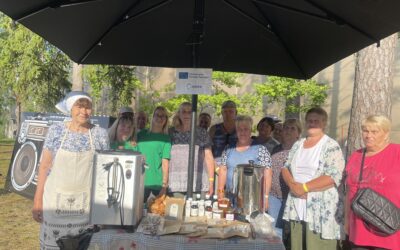
ESIRA Regional Dissemination Workshop in Druskininkai Showcases Community-Led Social Innovation
On 26 June 2026, the ESIRA Regional Dissemination Workshop “Social Innovation in Rural Areas: Results of Implemented Social Initiatives and Future Opportunities” took place in Druskininkai Municipality, Lithuania. The event brought together more than 100 participants,...
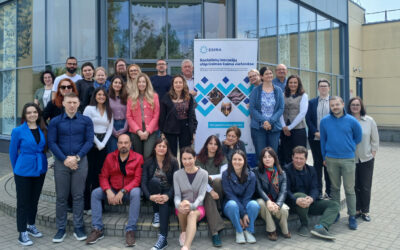
The Fifth General Assembly was held in Lithuania
The Fifth General Assembly of the ESIRA project was held from May 19 to 22, 2026, in Druskininkai, Lithuania. The meeting was organized by the Lithuanian Centre for Social Sciences and Druskininkai Local Action Group. Over three days, partners reviewed ESIRA progress,...
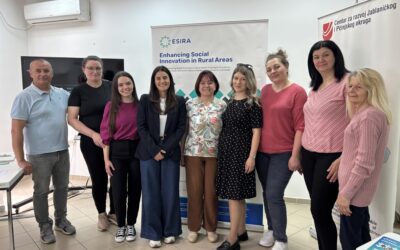
ESIRA Regional Dissemination Workshop in Leskovac Highlights Support for Rural Women Entrepreneurs
A regional dissemination workshop was held on 11 May 2026 in Leskovac, Serbia, bringing together women entrepreneurs from rural areas, representatives of local development institutions, entrepreneurship experts, and specialists in marketing, branding, and business...
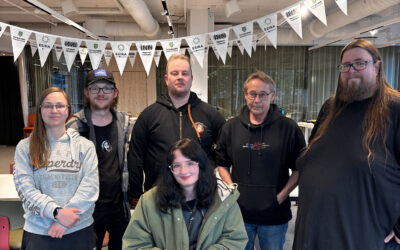
ARENA_Gaming Kongsvinger officially established
ARENA_Gaming Kongsvinger, a pilot from the Norwegian partner in ESIRA, was formally established as a non-profit association on 4 May. As a community-driven and non-commercial initiative, ARENA_Gaming represents a clear social economy initiative, aiming to create an...
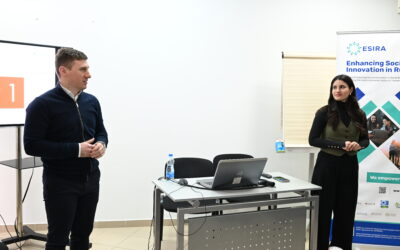
INITIATIVE TO SUPPORT WOMEN-LED RURAL BUSINESSES LAUNCHED IN LESKOVAC
An initiative aimed at strengthening small women-led businesses from rural areas was launched on 18 February 2026 in Leskovac. The event was organized by the Institute for Development and Innovation (IRI), together with the Center for Development of Jablanica and...

STRENGTHENING THE SOCIAL ECONOMY IN REGIONS: DRUSKININKAI RURAL AREA
On December 8–9, 2025, the Institute of Economics and Rural Development of the Lithuanian Center for Social Sciences, together with the Druskininkai Local Action Group, organized a two-day ESIRA project working meeting. The event brought together representatives of...

ESIRA project held scientific dissemination workshop and Community of Practice session on rural innovation
The ESIRA project successfully organized its final Scientific Dissemination Workshop for this year, titled “From Collaboration to Action: How Multi-Actor Platforms Shape Rural Innovation”, followed by a Community of Practice (CoP) session entitled “Lessons Learned and...