Esira
  • Home
  • Project
    • About Project
    • Key concepts
    • Key Tools
  • Pilot areas
    • Burgos
    • Abruzzo
    • Trentino
    • Northern great plain and cigánd district
    • Zachodniopomorskie
    • Leski-bieszczadzki
    • Jablanica & Pcinja District
    • Druskininkai
    • Innlandet
  • CoP
  • News
  • Outcomes
  • Contact us
  • English
    • Français
    • Magyar
    • Italiano
    • Lietuvių
    • Norsk bokmål
    • Polski
    • српски
    • Español
Select Page
ACCESSIBLE CINEMA EVENT IN CILLERUELO DE ABAJO PROMOTES SOCIAL INCLUSION IN RURAL AREAS

ACCESSIBLE CINEMA EVENT IN CILLERUELO DE ABAJO PROMOTES SOCIAL INCLUSION IN RURAL AREAS

by Marina Andjelkovic | Oct 10, 2025 | News

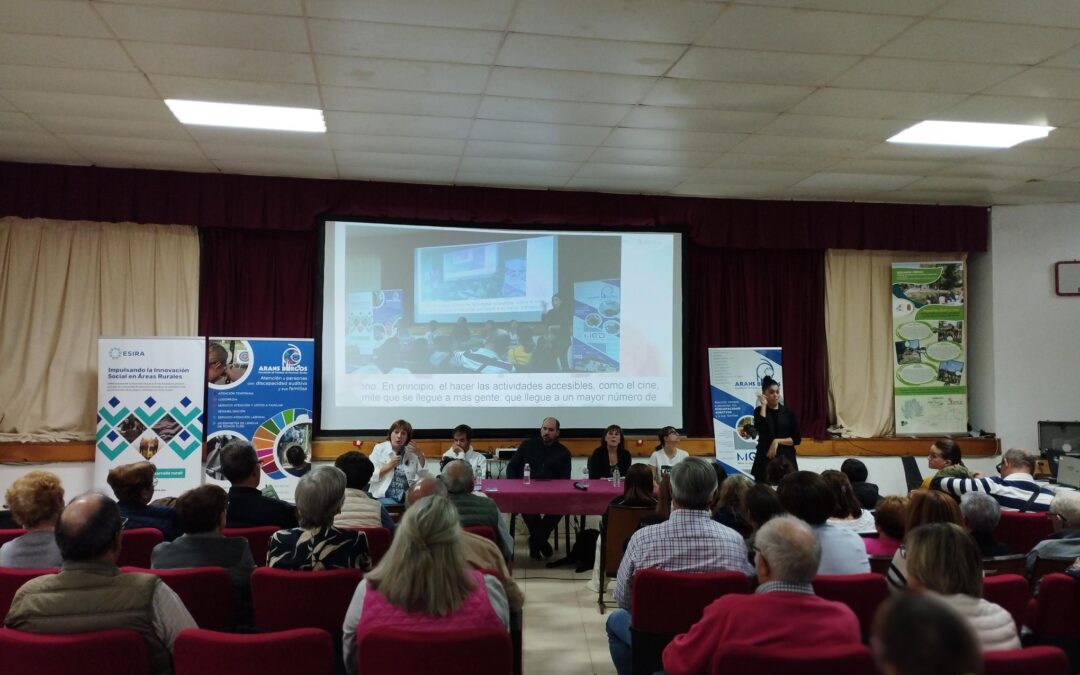
Last weekend, the village of Cilleruelo de Abajo, in the province of Burgos, held a very special event dedicated to accessible cinema. The initiative was organized by the Collalba Cultural Association, in collaboration with ARANSBUR (Association of Families of Deaf...
EL HUECO AND EL COLLETERO SHOWCASES FOR RURAL SOCIAL INNOVATION UNDER ESIRA PROJECT

EL HUECO AND EL COLLETERO SHOWCASES FOR RURAL SOCIAL INNOVATION UNDER ESIRA PROJECT

by Marina Andjelkovic | Sep 23, 2025 | Burgos, Spain, News

As part of the training activities carried out by the European ESIRA Project, focused on promoting social innovation in rural areas, on Friday, September 12, nearly 50 rural development practitioners took part in an intensive workday aimed at identifying and learning...
THIRD GENERAL ASSEMBLY OF THE ESIRA PROJECT HELD IN NORWAY

THIRD GENERAL ASSEMBLY OF THE ESIRA PROJECT HELD IN NORWAY

by Marina Andjelkovic | May 27, 2025 | News

The third General Assembly of the ESIRA project (Enhancing Social Inclusion and Rural Areas) took place from May 20 to 22, 2025, in the Norwegian town of Kongsvinger. The event was hosted by local partners the Inland Norway University of Applied Sciences (INN), and...
BREAKING THE CYCLE OF RURAL DECLINE: ESIRA LAUNCHES ITS FIRST POLICY WORKSHOP

BREAKING THE CYCLE OF RURAL DECLINE: ESIRA LAUNCHES ITS FIRST POLICY WORKSHOP

by Marina Andjelkovic | Apr 30, 2025 | News

How can we reverse the cycle of rural decline? How can social economy actors be part of the solution? These were the central questions explored today, 29th of April 2025, during the first policy workshop of the ESIRA project, titled “Breaking the cycle of rural...
SAVE THE DATE! BREAKING THE CYCLE OF RURAL DECLINE: ESIRA POLICY EVENT ON 29TH APRIL 2025

SAVE THE DATE! BREAKING THE CYCLE OF RURAL DECLINE: ESIRA POLICY EVENT ON 29TH APRIL 2025

by Marina Andjelkovic | Mar 10, 2025 | News

Rural communities across the European Union face a self-reinforcing cycle of decline. The lack of jobs and reduced access to essential services, such as healthcare and education, drive outmigration, particularly among young people. This, in turn, weakens local...
RURAL LABS AS SOCIAL INNOVATION METHODOLOGY – EXPERIENCE THAT WE CAN ALL LEARN FROM!

RURAL LABS AS SOCIAL INNOVATION METHODOLOGY – EXPERIENCE THAT WE CAN ALL LEARN FROM!

by Marina Andjelkovic | Dec 19, 2024 | News

Within the ESIRA project, the first dissemination webinar was organized on December 18th with the topic: “Rural Labs as Social Innovation Methodology: Theoretical Basis and Practical Experiences”.During the webinar, the project team shared the results achieved so far...

« Older Entries
Next Entries »

Recent Posts

  • ESIRA stand attracts strong interest at Grensedagarna BRIDGE
  • ESIRA Regional Dissemination Workshop in Druskininkai Showcases Community-Led Social Innovation
  • SERVITISING RURAL HERITAGE: SOCIAL INNOVATION AND THE SOCIAL ECONOMY IN PERIPHERAL EUROPE
  • NEWSLETTER 5: ESIRA RURAL LABS DRIVE 57 SOCIAL INNOVATION INITIATIVES ACROSS RURAL EUROPE
  • THE FIFTH GENERAL ASSEMBLY WAS HELD IN LITHUANIA

Recent Comments

No comments to show.
  • Follow
  • Follow
  • Follow
  • Follow
  • Follow


ESIRA@ESIRA.EU

ZENODO

Funded by the European Union. Views and opinions expressed are however those of the author(s) only and do not necessarily reflect those of the European Union or the European Research Executive Agency (REA). Neither the European Union nor the granting authority can be held responsible for them.